
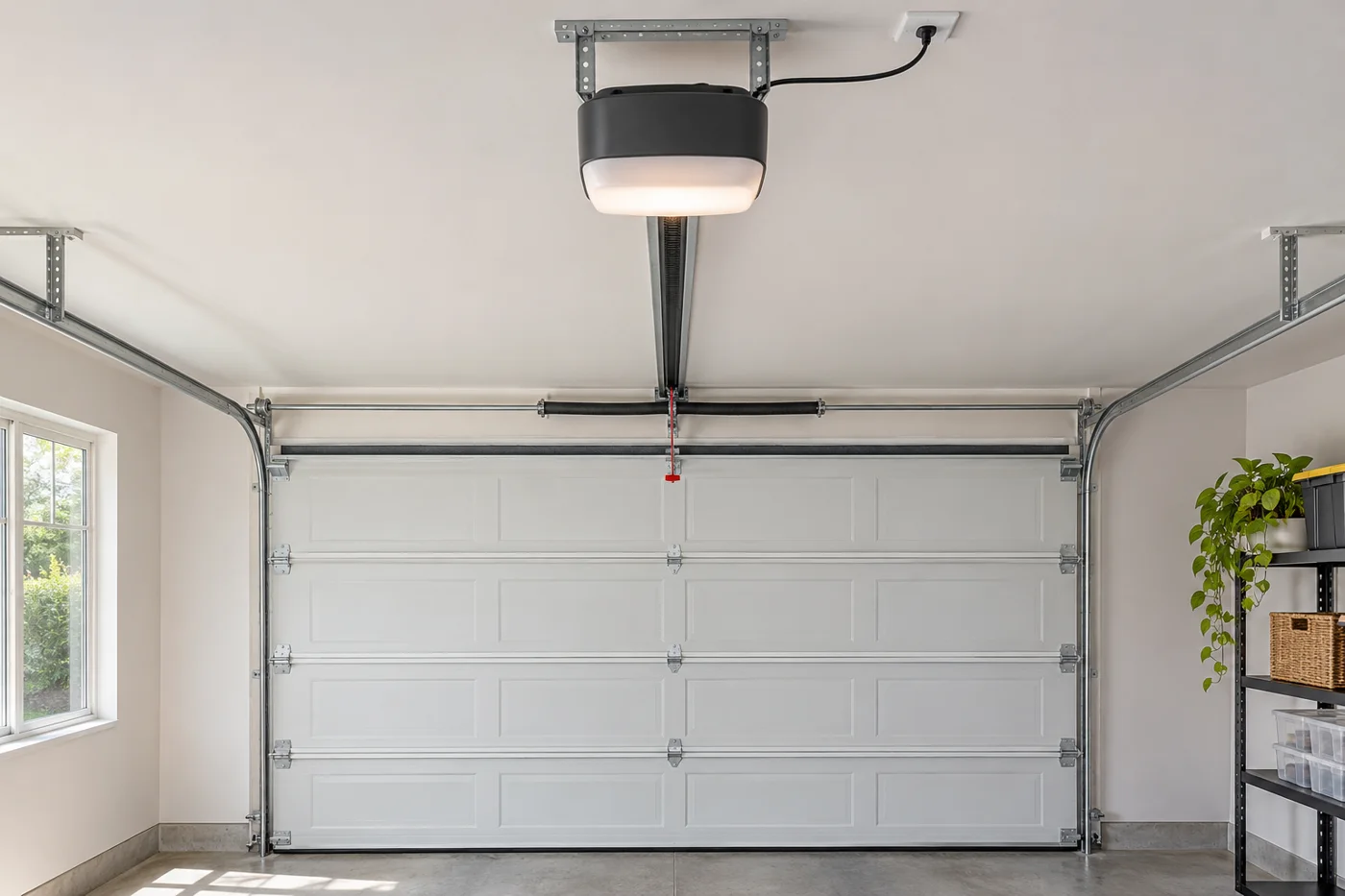
Have a service question? Explore the related service or call to discuss the door.
A local starting point
An opener upgrade should start with the door, not with an app or a horsepower label. A correctly selected operator still depends on a suitable, properly functioning door system. If the door is suddenly heavy, crooked or cable-damaged, describe that issue before asking for a new motor. Long sunny afternoons and sudden rain make both the door surface and the opening worth a look. A warm garage is not always an insulation problem: sun exposure, air leakage and how the garage connects to the house also matter.
Separate control trouble from mechanical trouble
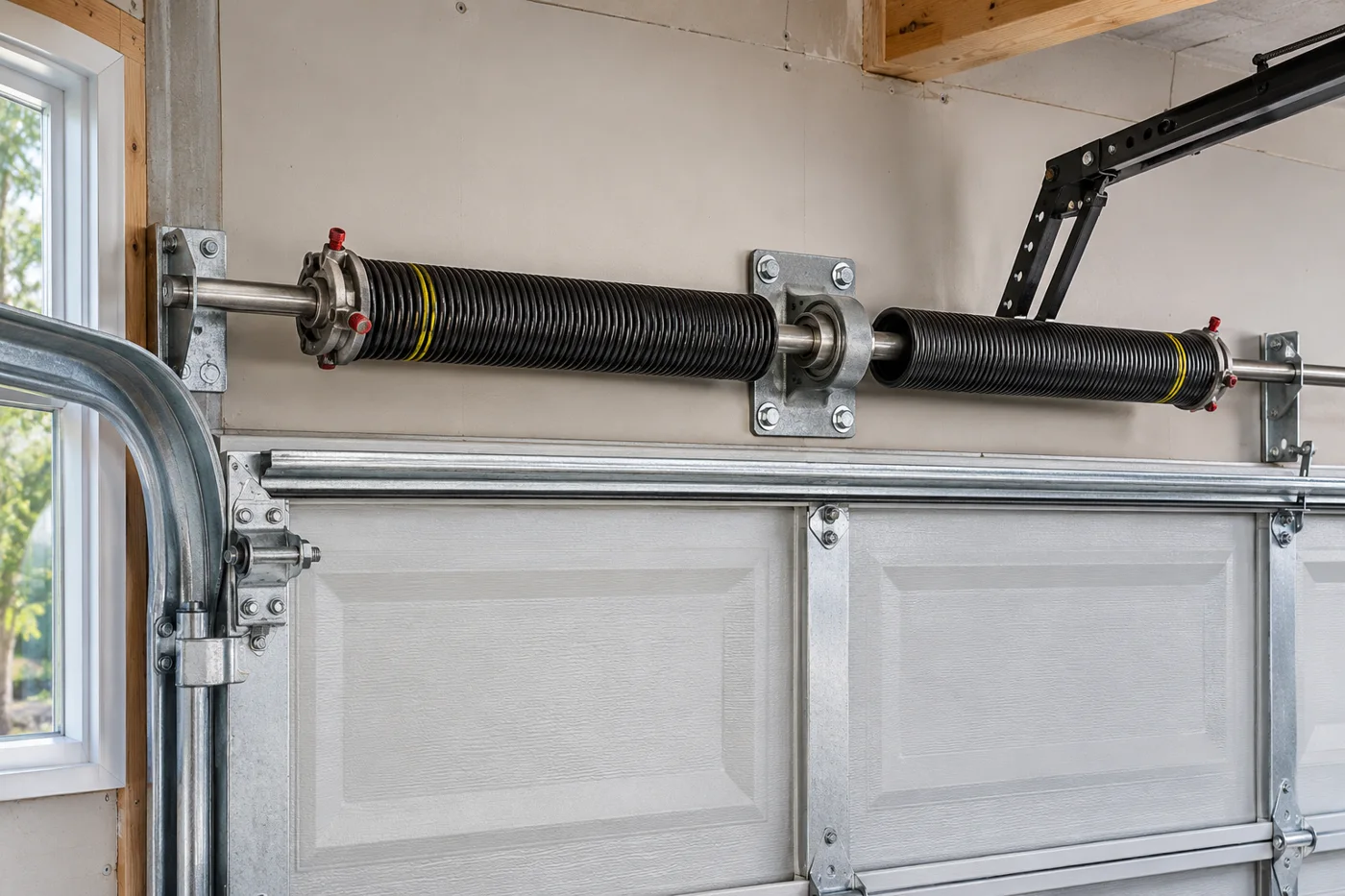
An unreliable remote, a wall control that behaves differently and a door that reverses can have different causes. A motor sound does not identify the fault. Before discussing a replacement operator, explain whether the door itself moves unevenly or has recently been struck. Stop using an unstable assembly. A new opener should not be used to compensate for a damaged door or a lifting system that needs professional attention.
Understand the fit requirements
Ceiling-mounted and wall-mounted operators have different clearance and compatibility requirements. Door travel, available overhead room, nearby storage and the type of lifting hardware all influence the options. Electrical supply may also need discussion. Ask which equipment is compatible with the existing door and what changes are included in the proposed work. The exact manufacturer instructions should govern installation and setup.
Discuss convenience features in plain terms
Think about who uses the garage and what would make access easier. A keypad, extra remote, battery backup or connected control may be relevant, but availability depends on the model and installation. Ask how household access is managed and what still works when power or internet service is interrupted. Do not publish access codes or share them through a public form. Feature preferences are useful once the mechanical fit has been established.
Plan around your property
Tell us whether the garage opens onto an alley, a shared drive or a front driveway. Keep the approach clear and mention a parked vehicle, a low overhead shelf or storage close to the tracks. A wide two-car opening, a single bay and a tall sectional door put different demands on the lifting system. Describe the actual door rather than choosing parts from a motor label. Think about the entrance as part of your routine: when it is used, who needs access and what needs to remain clear. These details help make the service conversation specific without assuming that every property needs the same equipment or work.
Keep safety devices in the conversation
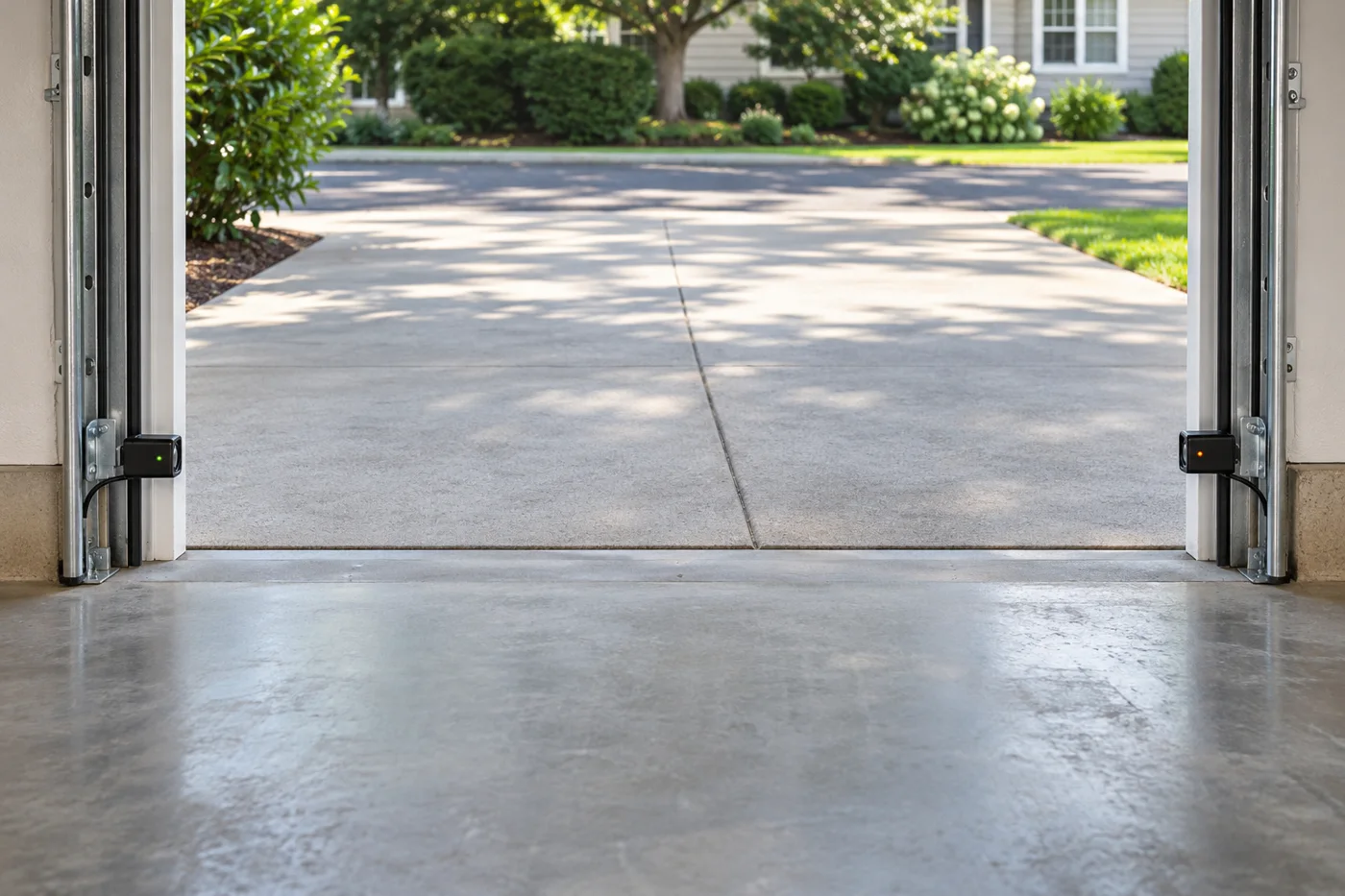
The operator, photoelectric devices and other safety features must work as specified for the system. Do not cover, relocate or bypass sensors to make a troublesome door close. Tell the technician about blinking indicators or a reversal from a safe position. Discuss the operating checks and the instructions you will receive after installation. Manufacturer guidance is more useful than a generic online adjustment sequence.
Prepare the right information before calling
If readable from the floor, note the existing operator model and describe the door size and material. Mention overhead obstructions, unusual noise and whether the wall control, remote and keypad behave the same way. Call to talk through an opener repair or replacement request rather than guessing which equipment to order. The next conversation establishes suitability, scope and appointment timing for the actual installation.
Further reading
DASMA garage door systems safety guidance ↗
Follow the instructions for your exact door and operator. This guide helps with recognition and planning; work on loaded lifting hardware belongs with trained technicians.